Making soap guide
Melt and pour troubleshooting: bubbles, wrinkles, cloudiness and separating layers
Short answer
Most melt and pour problems come down to temperature and timing. Melt in short bursts without boiling, add colour and scent at about 125°F, spritz rubbing alcohol on every surface you pour onto, and leave the mould still until the soap has set. That alone fixes bubbles, wrinkles and layers that split apart.
Bubbles on top of the bar
Air gets in when the base is stirred hard or poured from high up. Stir slowly, let the melted base rest for a moment so bubbles rise, pour low and steadily, then spritz the surface with rubbing alcohol: the bubbles pop on contact.
A wrinkled or rippled surface
As the base cools, a thin skin forms on top. If the mould is moved or an embed is pushed in once that skin has formed, it wrinkles. Pour at around 125°F, put the mould where it can stay, and don't touch it until it's firm. If a skin forms in the bowl before you pour, stir it back in or warm the base for a few seconds.
Clear soap that turns cloudy
A clear base stays clear when it isn't overheated and isn't mixed with anything opaque. The usual causes:
- The base boiled or was melted on high power for too long.
- A creamy base was mixed in: even a little goat milk or shea base clouds a clear bar.
- Too much fragrance, or a fragrance or additive that isn't clear itself.
- Mica: it adds shimmer but takes away some clarity. For see-through colour, use a soap dye instead.
Layers that split apart
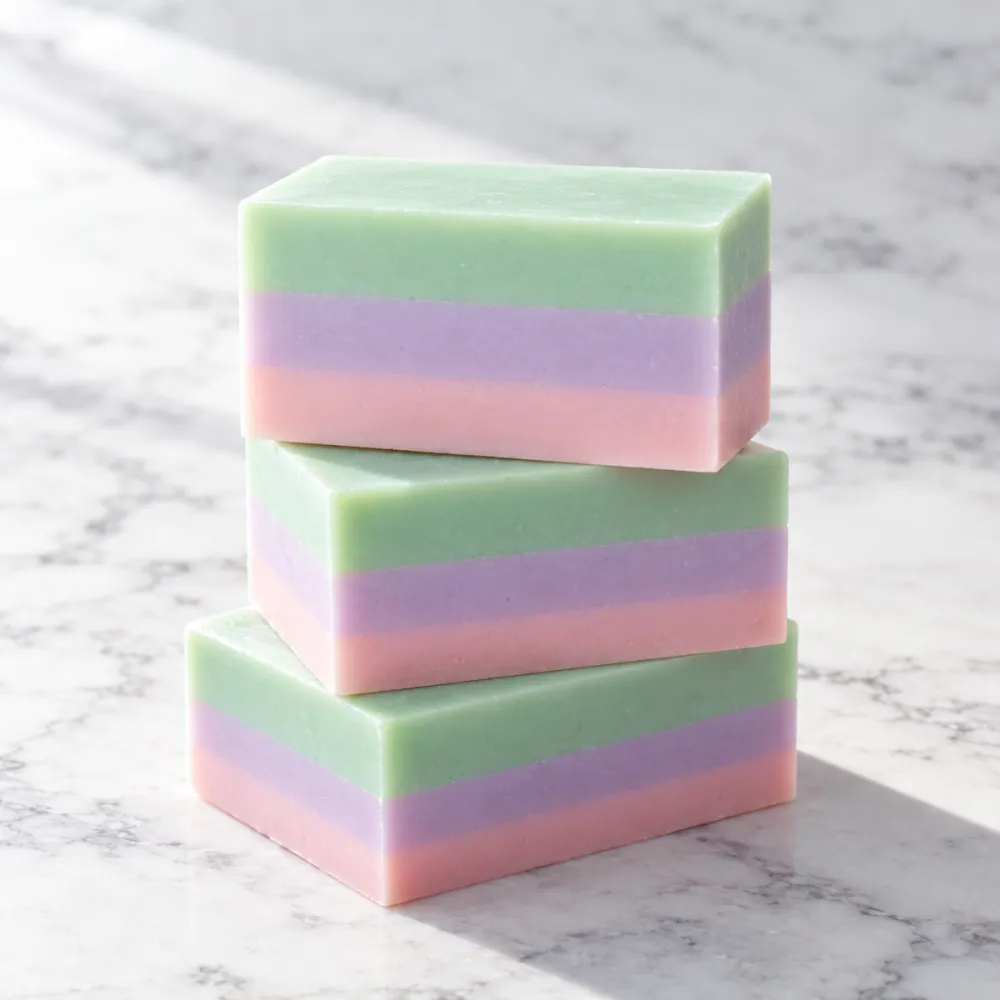
Layers bond when the bottom layer is set but still warm, and the surface is spritzed with rubbing alcohol right before the next pour. If the first layer goes cold and hard, lightly scratch the surface with a fork, spritz, then pour the next layer at about 125°F. Too hot and it melts the layer below; too cool and it won't stick.
Embeds that float, sink or show bubbles
Pour a thin first layer and let it form a skin. Spritz the embed with alcohol, set it in place, spritz again and pour the rest. Embeds must be clean and dry, and dried flowers work best near the surface in a clear base.
To suspend a toy or a big embed in the middle of a clear bar, let the base cool until the top just starts to skin over, stir it, then pour: the thicker base holds the embed in place. A wooden skewer can prop it against the side until the soap takes over.
Bars stuck in the mould, or soft and sticky
Bars that won't release usually need more time. Our recipes set for at least 4 hours, and 6 for bars with a lot of add-ins; overnight is safest. If they still stick, put the mould in the freezer for 10 to 15 minutes and they'll pop out. Bars that stay soft or sticky after a day usually have too much fragrance or extra oil in them; keep to the amounts in your recipe.
Updated October 12, 2026 · By the Skin Said Yes team, soapmakers in Greece