Making soap guide
Why does melt and pour soap sweat, and how do I stop it?
Short answer
Melt and pour soap "sweats" because it's rich in glycerin, which pulls moisture out of the air. The droplets, called glycerin dew, are harmless and don't mean the soap has gone bad. Wrap each bar airtight as soon as it has set, store it somewhere cool and dry, and the beads won't come back.
What the droplets are
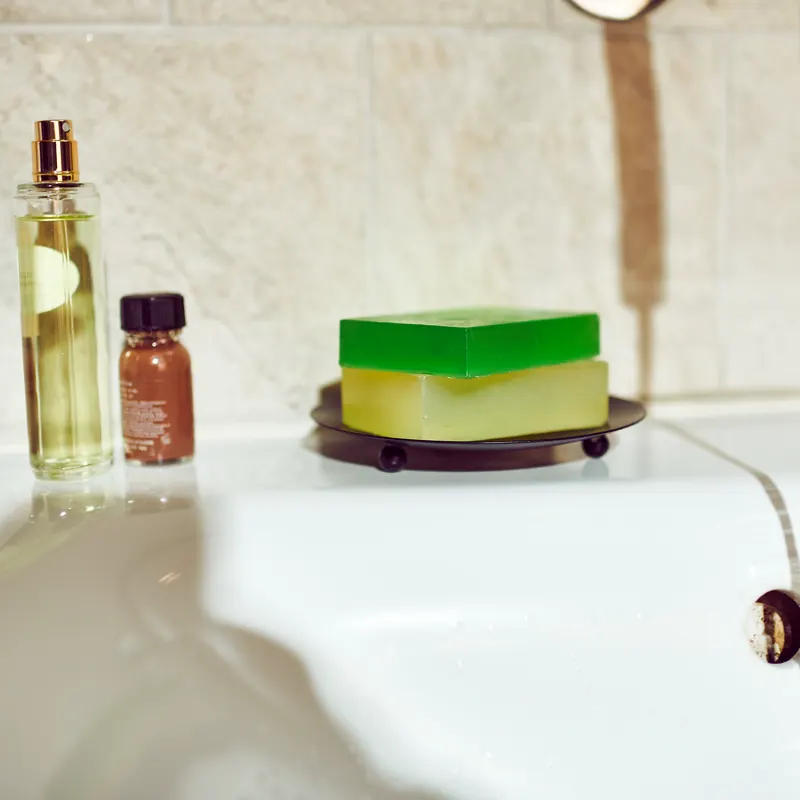
Glycerin is what keeps melt and pour soap smooth and meltable, and it's also a humectant: it draws water from the air. In a humid room, that water collects on the surface of unwrapped bars as small beads or a slightly greasy film. It's water, not oil and not a sign of spoilage.
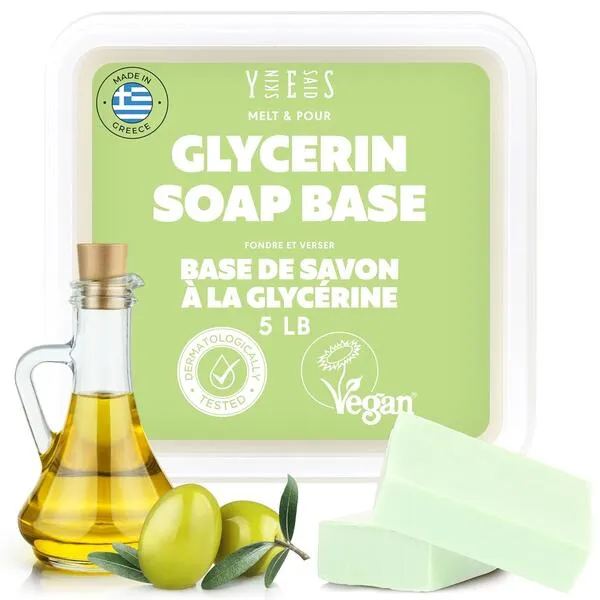
Clear bases sweat more than creamy ones, because they carry more glycerin and sorbitol. Our glycerin, aloe vera and honey bases list both near the top of their ingredients for exactly that reason: it's what makes them see-through.
How to stop it
Moisture can't settle on a bar that air can't reach. In order of how much they help:
- Wrap each bar airtight once it has set: cling film, shrink wrap or a sealed bag. Paper or a cardboard box alone won't keep humid air out.
- Wrap the same day. A bar left out overnight in a humid room can start to bead before you wrap it.
- Store bars somewhere cool and dry, not in a bathroom or a steamy kitchen.
What to do with bars that have already sweated
Pat the beads off with a paper towel and leave the bar on a rack in a dry room, or in front of a fan, for an hour or two. Once the surface is dry, wrap it. The soap is perfectly fine to use, sell or give.
Updated October 12, 2026 · By the Skin Said Yes team, soapmakers in Greece