Making soap guide
Is melt and pour real soap?
Short answer
Yes. Melt and pour base is real soap: oils that were turned into soap with lye before the base reached you. Extra glycerin and sorbitol let it melt and set again, so you skip handling lye and waiting for a cure. You still choose the colour, scent, shape and add-ins, and the bars are ready in about 4 hours.
| Melt and pour | Cold process | |
|---|---|---|
| Lye at home | None: the soap is already made | Yes, with gloves and goggles |
| Ready to use | About 4 hours | After a 4 to 6 week cure |
| Choice of oils | Set by the base | Your own recipe |
| Clear bars, layers, embeds | Easy | Hard |
| Good for | Beginners, gifts, detailed designs, making with kids | Custom recipes from scratch |
What's in a melt and pour base
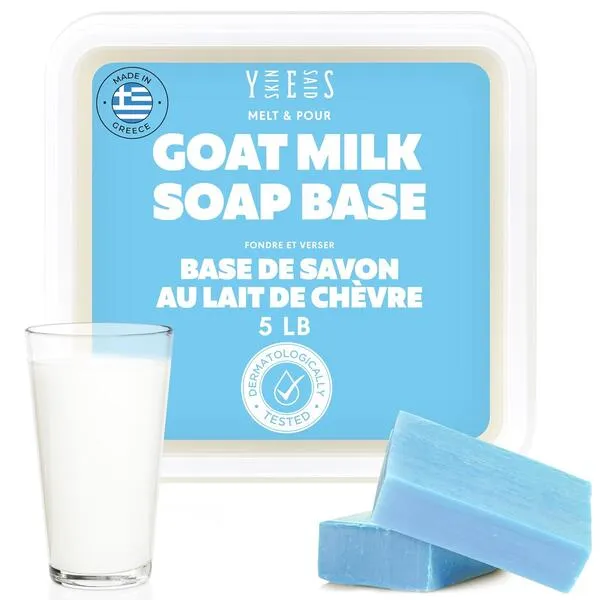
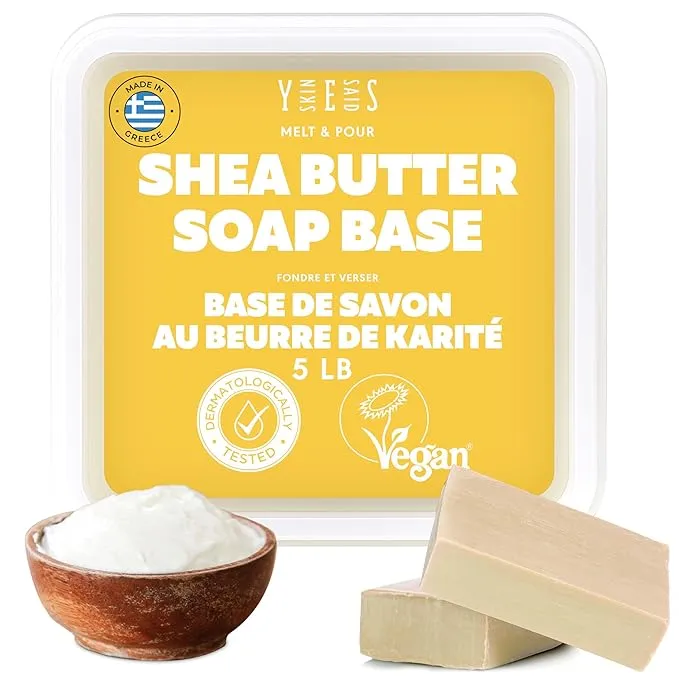
Read the ingredient list of a creamy base like our goat milk or shea butter base and you'll see sodium olivate, sodium cocoate, sodium stearate and sodium laurate. Those are olive, coconut and other oils after saponification: the same reaction that makes any bar of soap. The lye is used up in that reaction, so none is left in the block.
What makes it melt and pour is what's added around that soap: glycerin and sorbitol keep it meltable and smooth. Our clear bases (glycerin, aloe vera and honey) also contain mild coconut-derived cleansers, coco-glucoside and sodium coco-sulfate, which keep the bar see-through and help it lather.
Melt and pour or cold process: which to choose
Cold process means mixing oils with lye yourself. You control every oil in the recipe, but you need protective gear, a lye calculator and patience: the bars cure for weeks before they're ready.
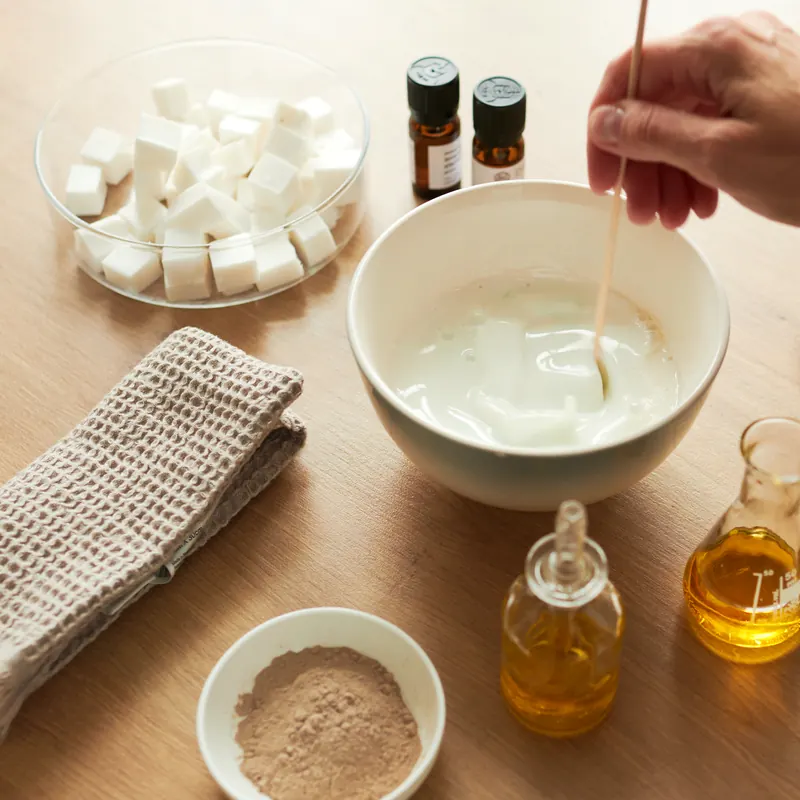
Melt and pour starts after that step. You cube the base, melt it under cling film in 30-second bursts, add colour and scent at about 125°F, pour and unmould once it's set. The recipe book in our tubs walks through 19 bars this way, from a chocolate-scented goat milk bar to a clear bar with a toy inside. It's the easier way to start, and the only practical way to make crystal-clear bars, sharp layers and embeds.
Why some soap makers look down on it
The criticism is mostly about the craft: shaping a ready-made soap is a different skill from making soap from oils and lye. The other part is quality. Bases differ a lot, so read the whole ingredient list. Ours are made with saponified olive and coconut oil, use organic olive and coconut oil, contain no palm oil, and list every ingredient on the product page.
How to describe melt and pour soap when you sell it
Honest wording keeps customers' trust and keeps you clear of the arguments:
- Say "handmade with a melt and pour soap base" or "hand-poured", not "made from scratch".
- Don't call it "lye-free": every real soap was made with lye. Say "no lye remains in the bar" instead.
- List the base's full ingredients plus what you added (fragrance, colour, botanicals).
Updated October 12, 2026 · By the Skin Said Yes team, soapmakers in Greece